
UPDATE: The Hume Health Body Pod is selling out fast. Check availability and secure free shipping while stock lasts..
Why Are You Aging Faster Than Your Friends?
We're all the same age. Half of them look like they haven't changed since our twenties. I look like I went straight from 30 to 45. So I went looking for the reason, and it wasn't what I expected.
By Daniel Kerr | Wellness Writer & Self-Tracking Enthusiast
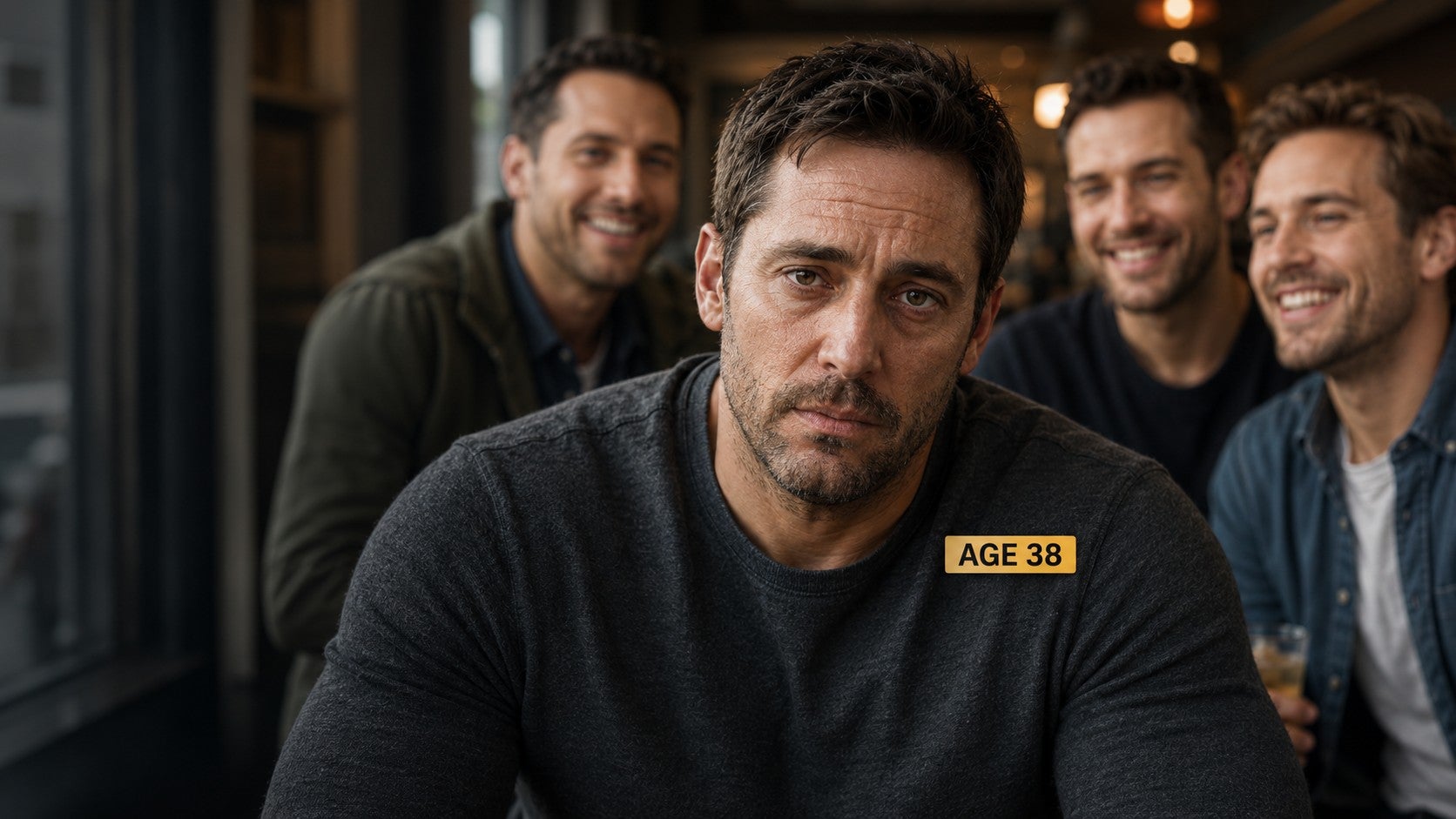
It was a group photo that did it.
I almost didn't recognize myself in it.
I looked worn. Puffy under the eyes, gray coming in fast, the heavy look of someone who hadn't slept properly in years.
Standing next to friends my exact age who looked like the clock had barely touched them.
Same age. You'd never have guessed it.
Mike still had the lean, easy energy he had at 25. I was the one needing a nap by mid afternoon and feeling every flight of stairs.

I'm 38. In that photo I could have passed for late forties. And it wasn't only how I looked.
I felt it too, slower mornings, less patience, a body that complained about things it never used to.
So I wanted to know what they were doing right, what I was doing wrong, and whether someone like me could still turn it around without flipping my whole life upside down.
What I found changed how I think about aging completely. It isn't the number of birthdays.
You have two ages: Chronological and Biological
Your chronological age is just the years since you were born. Fixed. Out of your hands.
Your biological age is how worn your body is, measured by how your heart, your sleep, and your recovery are holding up. Two people born the same year can have biological ages a decade or more apart. That difference predicts how you feel, how you move, and how long you stay healthy far better than the candles on the cake.
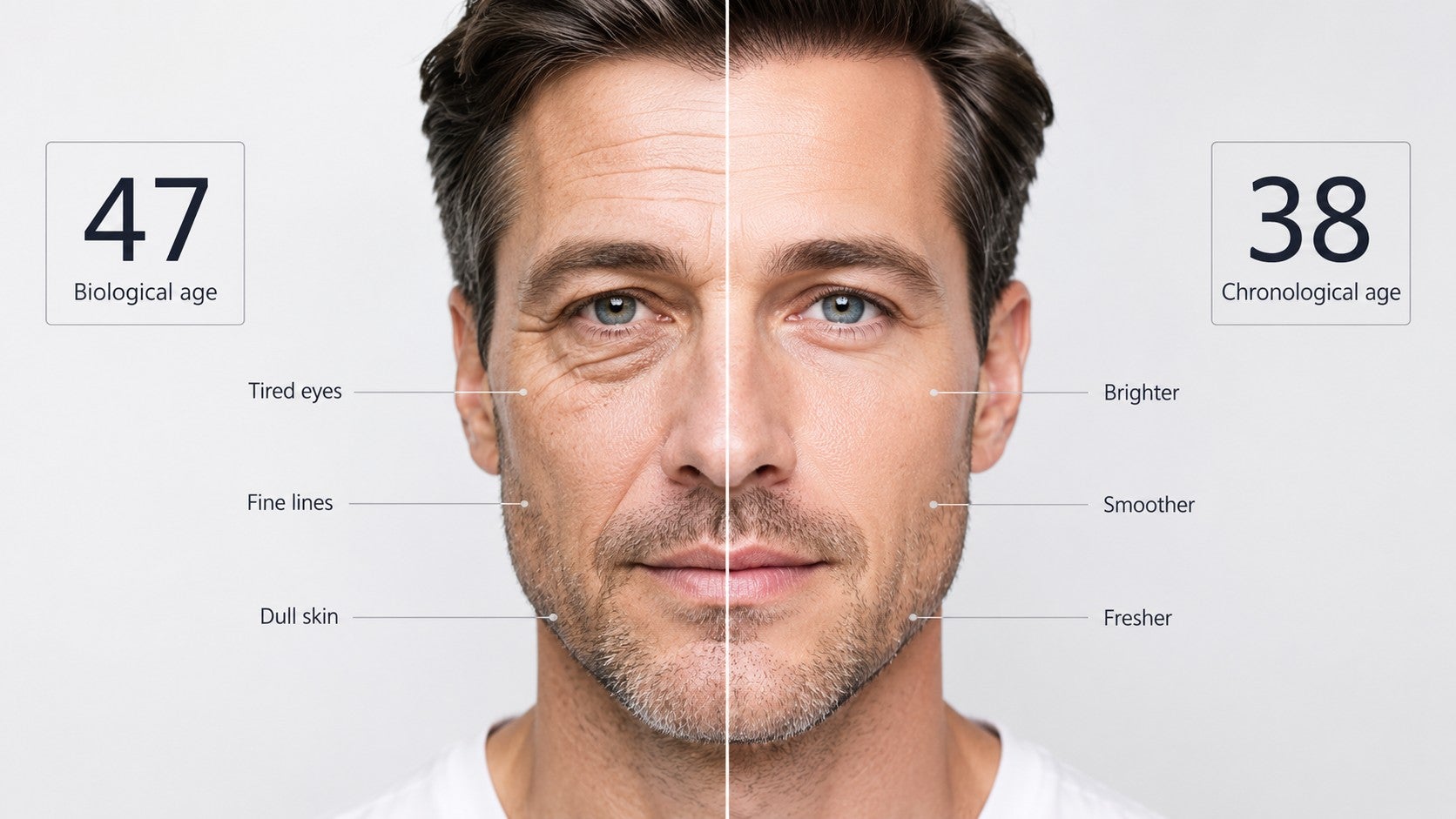
The part that gave me hope: your genes set maybe 20 to 25 percent of how you age. The rest comes down to daily habits: how you sleep, how your body handles stress, how much you move, what you drink. That's most of it. And most of it is yours to change.
My friends weren't lucky. They'd been doing things, on purpose, for years, that kept their bodies young. I'd been doing the opposite without realizing it.
The four things aging you faster
1.
Sleep that doesn't repair
The deepest, most restorative sleep is when your body releases growth hormone and rebuilds tissue overnight. It shrinks with age and shrinks faster with stress and alcohol. Poor sleep over years is one of the strongest accelerants of biological aging. I thought I slept fine. I had no idea what my nights looked like.
2.
A stressed system that never resets
Chronic stress keeps your body on alert. One clear signal is heart rate variability, the small timing changes between heartbeats. Younger, more resilient bodies show higher variability. Mine, I'd later learn, was flat. My nervous system never switched off, day or night.
3.
A heart that's working too hard at rest
A fit, younger-aging body has a lower resting heart rate and recovers quickly after effort. Mine was running fast even when I sat still, the cardiovascular sign of a body under more strain than its years.
4.
Sitting still, year after year
Movement is the single biggest lever for slowing aging at the cellular level. Not marathons. Walking, stairs, a bit of strength work. The friends who aged slowly simply moved more, every day, for decades. I'd been mostly still since my forties.
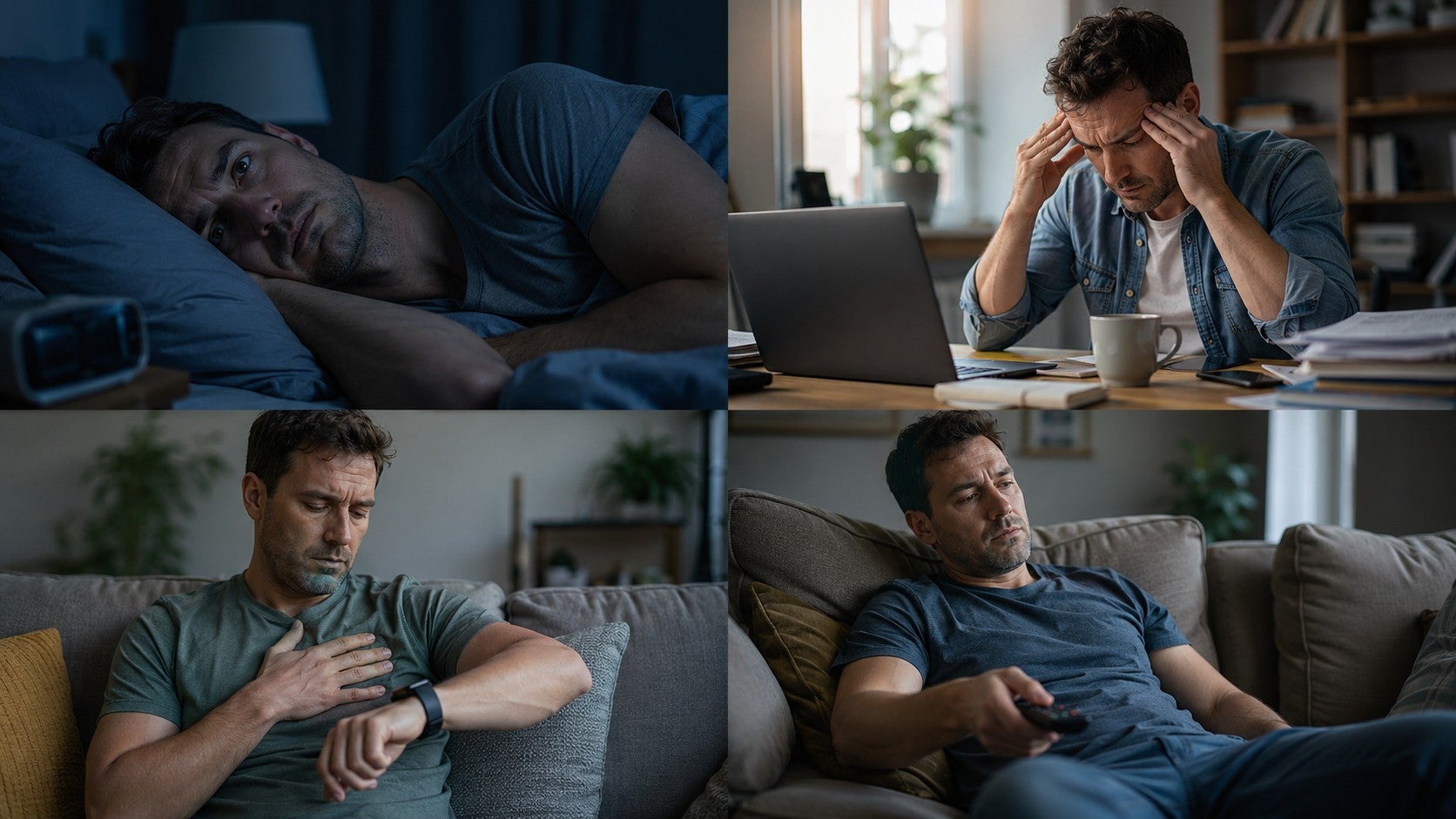
Read that list back. Sleep, stress, heart, movement. Every one happens quietly, every day, and you only see the result years later in a mirror or a group photo. That was the problem. I'd been aging fast for a decade with nothing telling me until it was staring back at me.
If this sounds like you too
✕
People your age look noticeably younger or fresher than you do
✕
You're winded by stairs that used to be nothing
✕
You wake up stiff and slow, even after a full night
✕
Your energy drops off a cliff by mid afternoon
✕
You recover from a bad night or a hard day slower than you used to
The trick is getting that feedback early enough to do something with it, instead of finding out at a reunion.
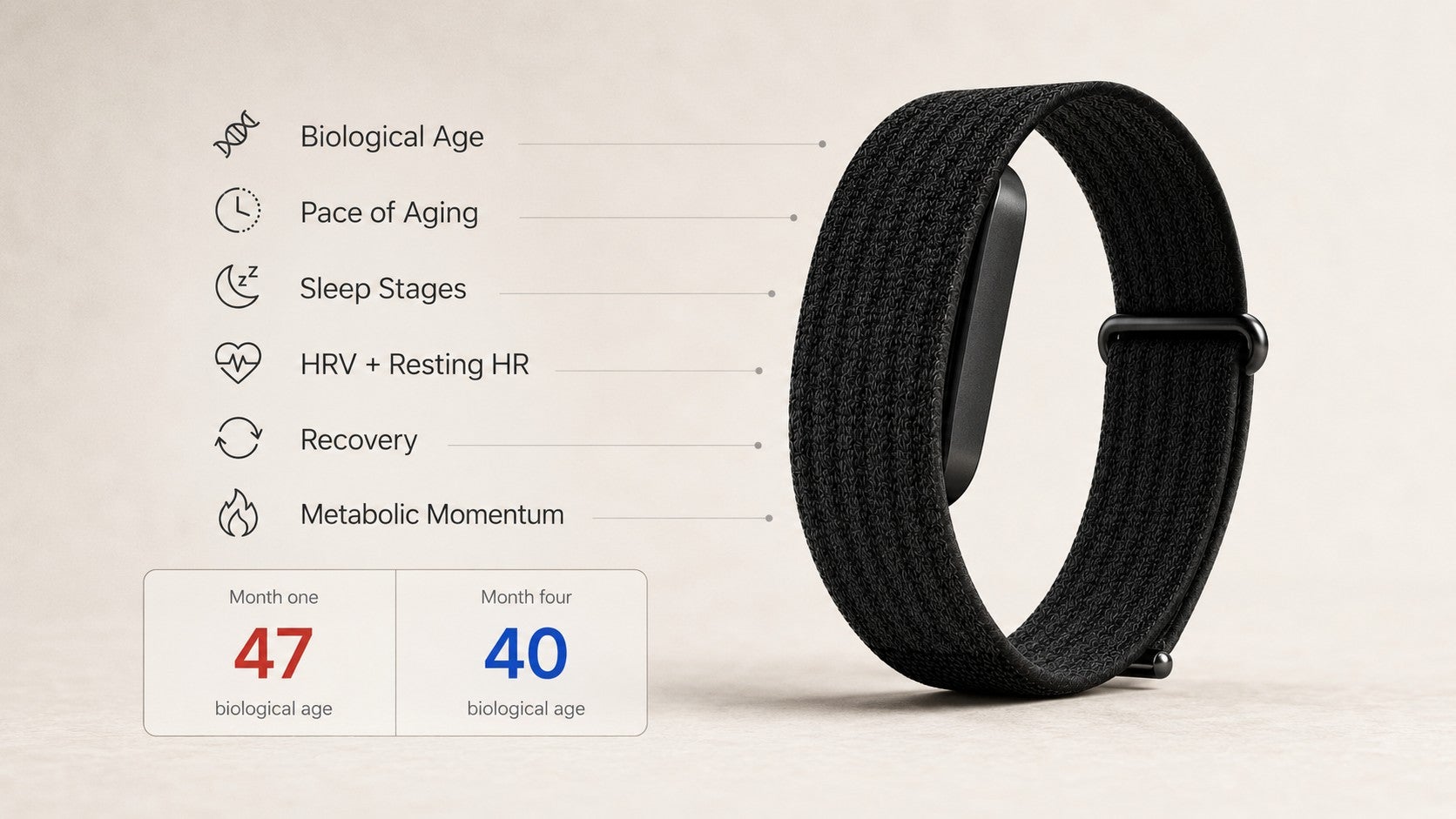
The wearable that put a number on my aging
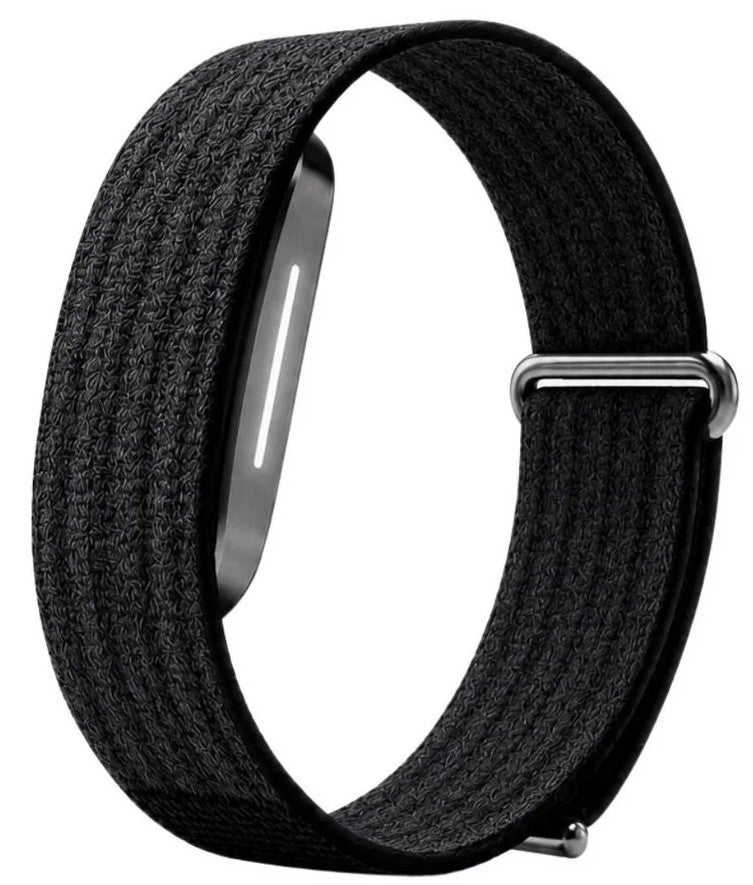
I didn't want another step counter. I wanted to know the things that drive how fast I age, the ones I could never feel. That's what led me to the Hume Band 2.0.
It's a health tracker you wear on your wrist. A wellness device, not a medical one, so it won't diagnose anything. What it does is read the signals behind biological aging, all day and through every night, and turn them into numbers I could finally act on.
The one that hits hardest, it gives you a Biological Age and a Pace of Aging reading, drawn from your heart, your sleep, and your recovery. For the first time I wasn't guessing how old my body was. I could see it. And I could watch it move.
Month one
47
biological age
Month four
40
biological age
These are the signals the Band reads, and why each one matters for how fast you age:
Biological Age and Pace of Aging. One clear read on how old your body is running, and whether you're speeding up or slowing down.
Full sleep stages, every night. Light, deep, REM, awake. The repair that keeps you young either happens or it doesn't, and now you see which.
Heart rate variability and resting heart rate. The two clearest signs of whether your heart and nervous system are aging well or under strain.
Heart Resilience and Recovery. How quickly you bounce back from strain, which fades as you age and climbs again when you train it.
Metabolic Momentum. The trend across weeks, so you know whether the changes you're making are working or wasting your time.
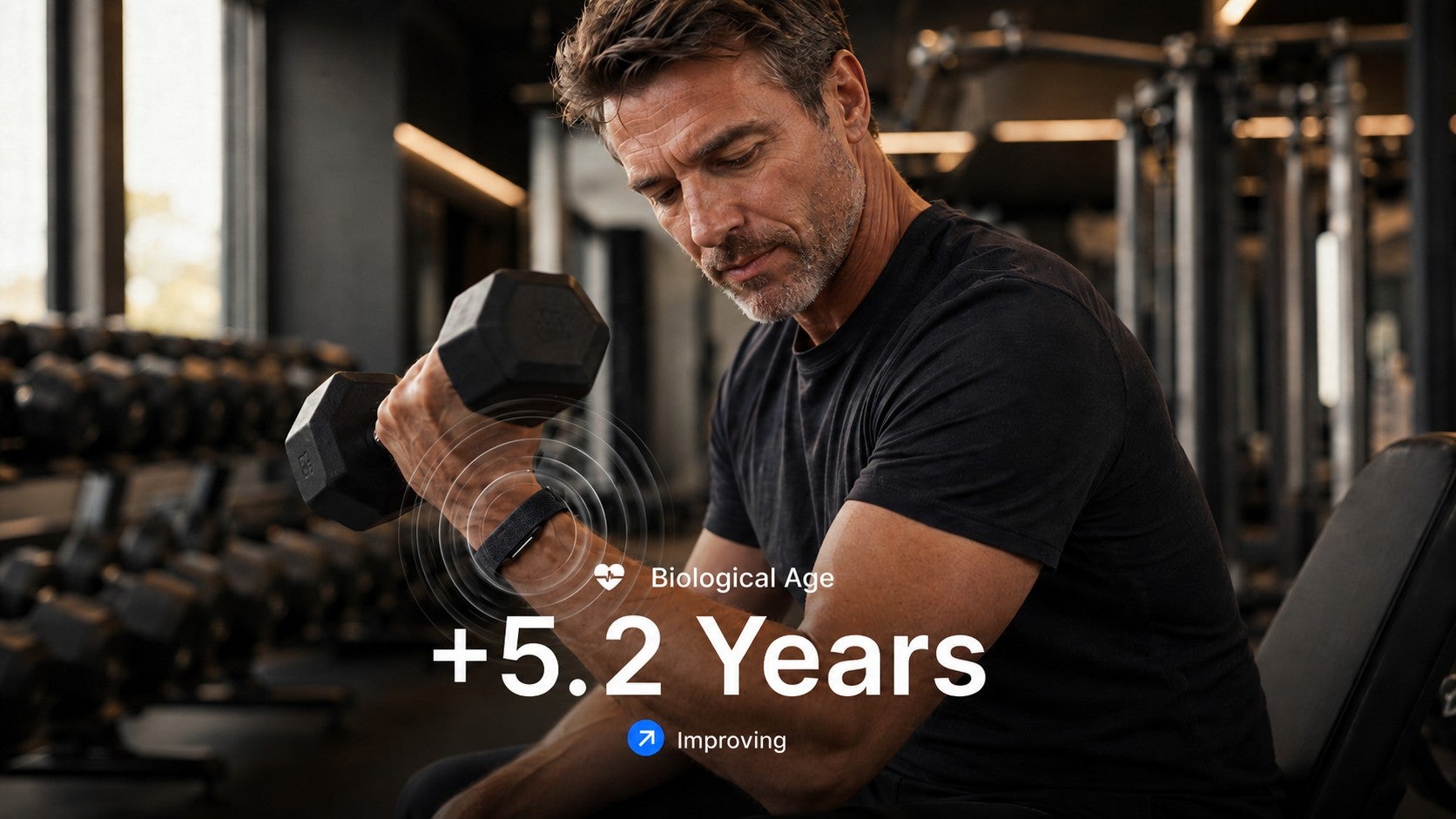
How it turned my aging around
Seeing the number was a shock. Moving it was the part that changed my life. The Band made that a simple loop instead of a guessing game.
1. It showed me what was aging me
My deep sleep was a sliver. My resting heart rate ran high all night, every night I had wine with dinner. My recovery score told me I was overreaching on the days I felt worse. The four things from that list, finally visible, in my own numbers.
2. It told me which change to make first
I didn't overhaul my whole life. I cut the midweek wine, started a short walk after dinner, and moved bedtime up an hour. Three small things, picked because the data pointed straight at them. No willpower marathon, no guesswork.
3. It proved the changes were working
Within two weeks my deep sleep climbed. My resting heart rate started dropping overnight. The Pace of Aging trend bent the right way. Watching that line move was the first time anything ever told me my effort was paying off. So I kept going.
Four months in, my biological age read 40, down from 47. Seven years off the clock, not because I did anything heroic, but because I could finally see which small things mattered and watch them work.
You can't slow down something you can't see. The day I could see it, slowing it down got simpler.
All night
Continuous heart, sleep & recovery tracking
14 days
Real-use battery,
30-minute fast charge
45 days
Return window
if it isn't for you
People who turned the clock back
"My biological age came back four years over my real age. That was the wake up call. I fixed my sleep and started walking after work. Four months later it read younger than my actual age. I move like I did in my thirties."
David M., Age 52
"I always felt older than my friends and never knew why. The Band showed my stress by keeping my heart rate up all night. I changed my evenings and watched my recovery climb. I finally feel my age instead of a decade past it."
Patricia R., Age 49
Your birthdays are fixed. How fast your body ages is not. The first step is putting a number on it, so you know what you're working with and whether it's moving.
Biological age, sleep & recovery, no subscription needed




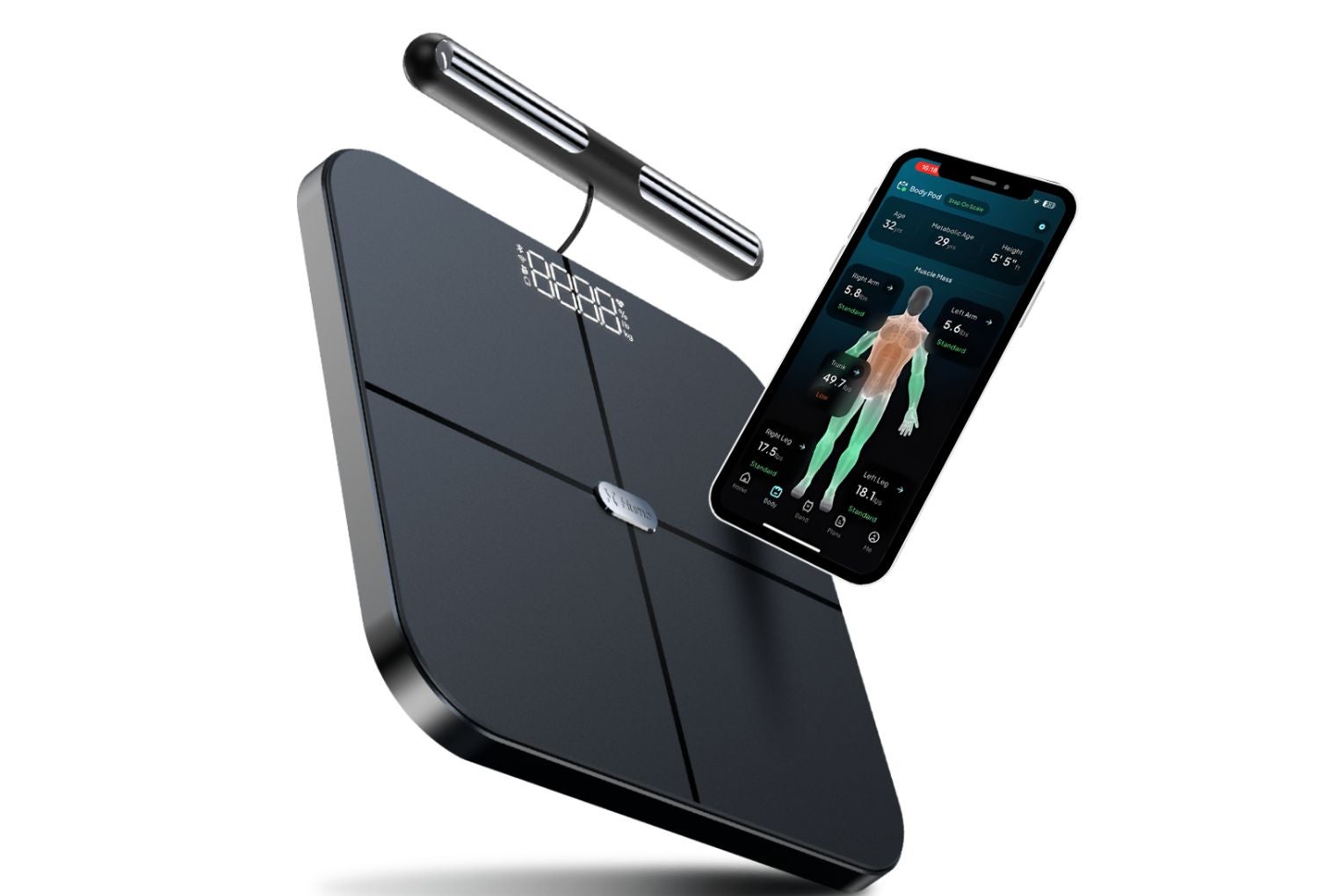
Order Now and Receive a Special Discount!
That's the lowest bioelectrical impedance price that the Hume Health Pod has ever been offered for!
Compare that to:
● DEXA scans: $75-150 per session (you need 10+ sessions per year to track properly = $750-1,500/year)
● Bod Pod sessions: $50-75 per test
● Professional BIA analysis at clinics: $40-100 per session
● InBody scans at gyms: $25-50 per scan.
Check Availability
The Hume Band 2.0 is a wellness wearable, not a medical device. It is not intended to diagnose, treat, cure, or prevent any disease. Biological Age and Pace of Aging are wellness estimates based on tracked signals and are not a clinical measurement. Blood pressure tracking is a future app feature pending FDA approval and is not currently active.
