
Top 3 Longevity Wearables of 2026, Tested for Daily Health Tracking
A preventive medicine specialist tried the three most talked-about longevity bands of the year. One picks up the slow drift before a blood test does. The other two sell you a fitness score in a longevity wrapper.
By: Elena Marsh — Competitive Amateur Cyclist

If you're sleeping 8 hours and still waking up tired, or watching the number on the blood pressure cuff at your annual physical creep up another 3 or 4 points each year, the underlying cause is not stress, age, or a rough week.
These shifts could be signaling that your biological age is pulling ahead of your chronological age.
Research on aging has shown that as early as our mid-30s, the body starts losing roughly 1% of its mitochondrial function, VO₂ max, and cardiovascular resilience every year.
These are the same systems that determine how long you stay sharp, strong, and disease-free.
This gradual decline is what shows up later as the fatigue you can't sleep off, the recovery that takes three days instead of one, the blood pressure number that started drifting at 38 and ended up at 145/90 by 52. The slow downhill that most people only notice once a doctor names it.
"The wrist is the cheapest preventive medicine clinic ever invented, if the sensors are good enough to be trusted."

How do longevity wearables flag this before it shows up at a physical?
You can’t stop time, nor can you go back in time.
A standard annual physical captures one biometric snapshot per year. A wrist sensor reading at 1-second intervals captures 86,400.
But catching the biological drift early can change every decision you make about food, sleep, and training.
By tracking the metrics that move first when the body starts aging faster, you can see the trend lines before they become diagnoses, and reverse course while the change is still cheap.
Unlike basic fitness trackers that count steps and flash a daily ring, longevity wearables work on a different layer. They use medical-grade optical sensors to capture continuous readings of heart rate variability, blood oxygen, blood pressure trends, sleep architecture, and skin temperature.
They translate those signals into the metrics that aging research has tied to lifespan: biological age, pace of aging, metabolic capacity, and metabolic momentum.
What a longevity wearable should answer
How Fast Can You See Results?
A wearable does not improve your health. The data it shows does, but only when you change what you are doing because of it. Here is what the first six months look like with a band that captures clean data.
Week 1
Baseline reads stabilize. Real resting heart rate replaces the one you guessed. Sleep stage averages stop bouncing. First HRV trend line appears.
Month 1
Metabolic Momentum has enough data to read your habits against your physiology. You see which two weekday routines are wrecking your recovery. Biological age estimate stabilizes within two years of the final value.
Month 3
The pace of the aging trend becomes readable. Blood pressure trend lines flatten or move. AI recommendations get specific: shift bedtime by 40 minutes, drop one evening drink, move zone 2 work to mornings.
Month 6
Biological age responds. Studies on continuous biometric feedback show the people who watch the numbers daily change behavior, and the behavior changes the numbers. Anyone not consistent with the band will not see this curve.
5 things that separate a real longevity band from a fitness tracker
Sensor density (LEDs + photodiodes)
More light emitters and more photodiodes mean cleaner optical signals across skin tones, blood flow states, and sleep positions. A band with 2 LEDs guesses your HRV. A band with 5 LEDs and 4 photodiodes reads it. This is the single biggest accuracy gap in the category.
Continuous capture, every second
A reading every 5 minutes loses the moments that matter. Cardiovascular drift, sleep stage transitions, and stress spikes all happen on a sub-minute scale. A band that samples once per second produces 60 times the data and catches the shifts that thirty-minute averages erase.
True longevity metrics, not fitness scores
Biological age, pace of aging, metabolic capacity, and metabolic momentum are the metrics that aging research has validated against mortality outcomes. A "recovery score" is a workout coach. These are different measurements with different inputs and different uses.
Comfortable enough to never come off
A band that captures every second is worthless if you take it off at night because the strap is hot, stiff, or rubs. The single most underrated specification on a longevity wearable is strap material and clasp design. If it is not on your wrist at 3 a.m., it is not measuring recovery.
Red flags that mean a wearable is not a longevity device
No biological age or pace of aging readout
If the marketing talks about "wellness" and "activity goals" without a number for how fast you are aging, the band is not measuring aging. It is measuring movement.
Mandatory subscription to see basic data
Some brands charge a recurring fee just to view your own heart rate history. That is a leasing model, not a health tool. Walk away.
Battery life under 10 days
Anything that needs charging every 2 days comes off your wrist every 2 days. The nights you forget to put it back on are the nights with the most useful data. A 14-day battery solves this.
No blood pressure tracking
Hypertension is the single largest preventable cardiovascular risk factor in adults over 35. A longevity band without BP insights skips the most actionable trend on the wrist.
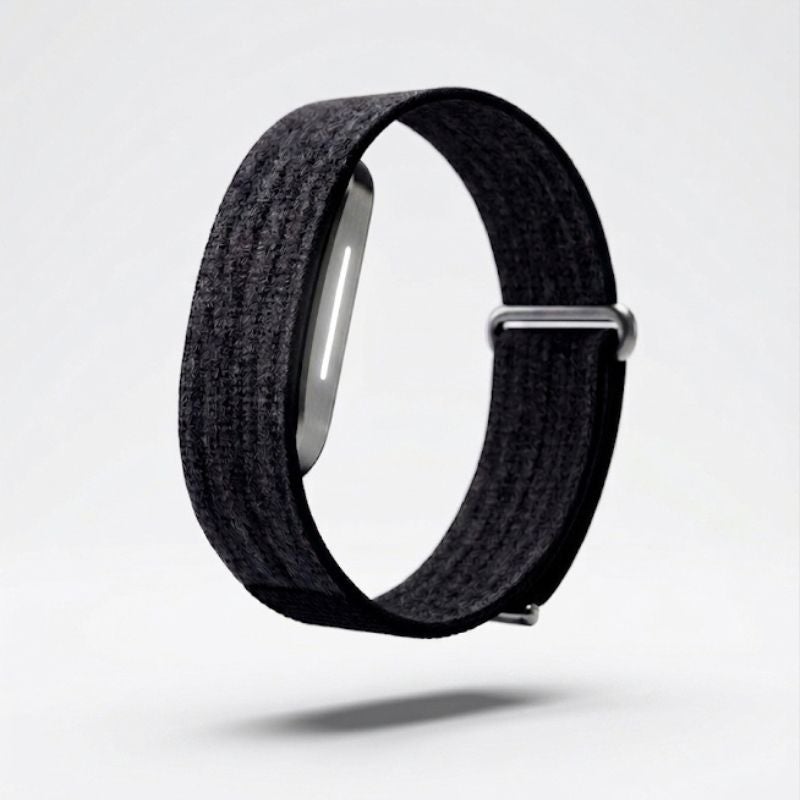 HUME
HUME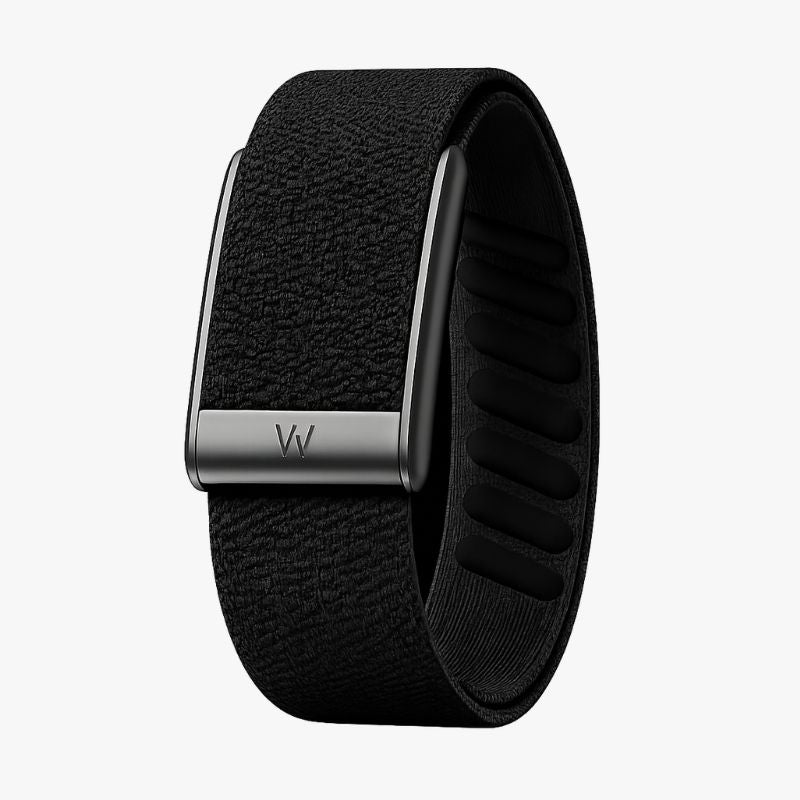 WHOOP
WHOOP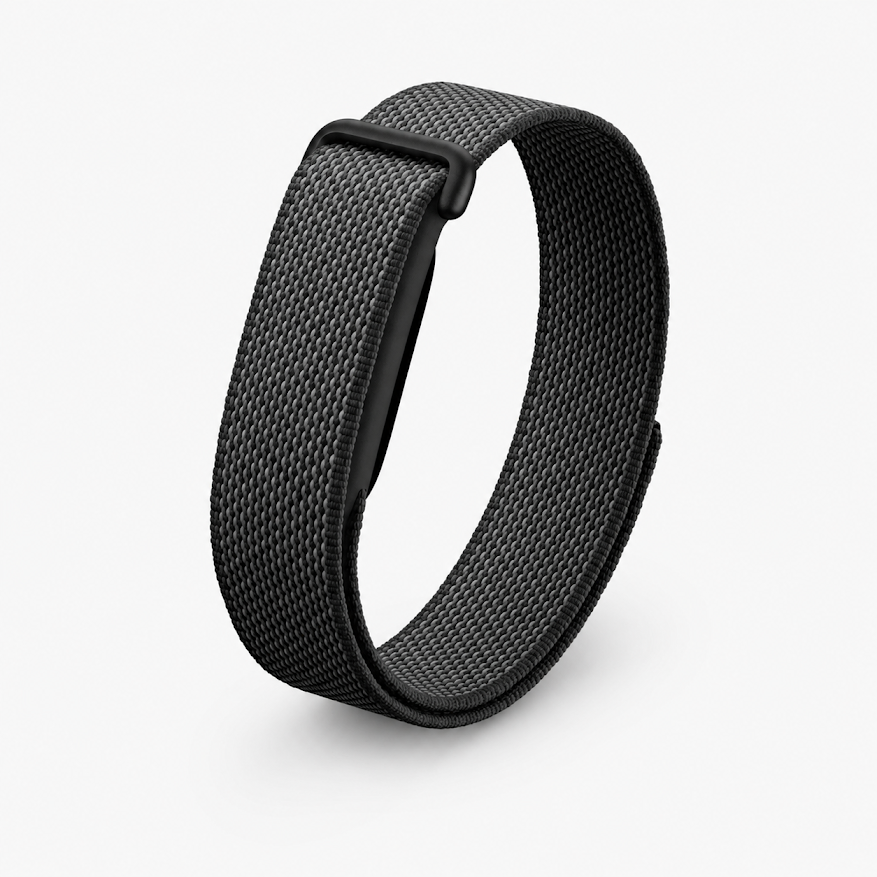 FITBIT
1.
Hume Band 2.0
by Hume Health


Our Rating
A+
Overall Grade
What we liked

5 LED + 4 photodiode sensor array, the densest in this comparison
Biological age, pace of aging, metabolic capacity, and metabolic momentum, all on the free app
Blood pressure insights without a cuff, the only band in this group at this price
14-day battery, 30-minute full charge
UltraLux strap stays on through sleep without leaving a mark
Chronic illness indicators flag drift before symptoms appear
Full data access, no subscription required
AI recommendations on Premium ($8.99/mo) translate metrics into action
45-day refund window, 1-year warranty
What to keep in mind

AI coaching sits behind Premium at $8.99 per month

powerful longevity wearable on the wrist in 2026
Our Conclusion :
Hume Band 2.0 is the first wrist wearable we have tested that ties continuous biometric capture to a working longevity engine. Not a recovery score. A biological age readout, a pace of aging trend, metabolic capacity, and metabolic momentum, all on the free app.
The sensor stack is where the gap opens. 5 LEDs and 4 photodiodes sample at one-second intervals, which is more capture points than either competitor in this comparison. HRV reads stay clean across sleep positions. SpO2 holds at low perfusion. Blood pressure insights, new in Band 2.0, give a daily trend without a cuff.
The UltraLux strap is the first wearable strap we have worn through a full sleep cycle without a pressure mark. The battery runs 14 days on a charge, and a full charge takes about 30 minutes. The most underrated number on the spec sheet: the band is on your wrist the nights that matter.
AI-driven recommendations on Hume Premium translate the data into specific changes. Shift bedtime by 35 minutes. Drop the second coffee. Move endurance work to mornings. The free app gives you the metrics. Premium tells you what to change.
2.
WHOOP 5.0


Our Rating
B
Overall Grade
What we liked
Recovery, Sleep, and Strain scores are the category benchmark for training
14+ day battery, IP68 to 10 meters
Captures data every second
Women's Hormonal Insights cover cycle phases and training
Wearable through WHOOP Body garments, not just the wrist
What to keep in mind
Mandatory 12-month membership to use the band
Healthspan and Pace of Aging are locked to the Peak membership plan
Blood pressure and ECG require WHOOP MG hardware on the Life membership plan
Lifetime warranty expires the moment payment lapses
Total cost over 3 years exceeds Hume Band 2.0 by a wide margin
Our Conclusion :
WHOOP 5.0 is a performance wearable. Recovery, Strain, and Sleep scores are the cleanest in the industry, and athletes have been wearing this band on national broadcasts for years. The data is good. The model is the problem.
WHOOP does not sell the hardware. It rents you a band through a 12-month membership. The longevity layer (Healthspan, WHOOP Age, Pace of Aging) is gated to the Peak membership plan.
Blood pressure insights and ECG require the higher-priced WHOOP MG hardware on the Life membership plan. To get the full WHOOP longevity stack, you are buying the top-tier device on the top-tier membership.
The lifetime warranty ends the day you stop paying. So does access to your historical data. For someone who wants to own their health record across decades, this is a structural problem, not a pricing one.
3.
Google Fitbit Air


Our Rating
C
Overall Grade
What we liked
24/7 heart rate with Afib alerts
Light hardware at 5.2 g without band
50-meter water resistance
$99.99, the lowest entry price in this category
What to keep in mind
No biological age, no pace of aging, no metabolic metrics
No blood pressure tracking
7-day battery, the shortest in this comparison
Coaching features behind a Google Health Premium subscription
Requires a Google Account and continuous data sharing
Our Conclusion :
Google Fitbit Air is a fitness tracker, not a longevity wearable. It ranks third in this comparison because it is the only band in the group that does not measure aging. No biological age. No pace of aging. No metabolic capacity. No blood pressure trend.
What it does measure, it measures fine. 24/7 heart rate, Afib alerts, SpO2, resting heart rate, HRV averages, sleep stages, and automatic workout detection, all routed through the Google Health app. At $99.99 it is the cheapest entry in this group, and the hardware is genuinely light at 5.2 grams without the band.
Battery comes in at 7 days, half of what Hume Band 2.0 and WHOOP 5.0 offer. Coaching features move behind a Google Health Premium paywall after the 3-month trial, and the entire system runs on a Google Account, which means the company sees every reading.
If the goal is a step counter with heart rate alerts, this is the cheapest path. If the goal is to track how the body is aging, the wrong device is on the shopping list.
The verdict after 90 days on the wrist
Hume Band 2.0 is the only band that treats the wrist as a way into how the body is aging, not just how many steps it took. The longevity metrics are the differentiator. The sensor density is the proof. The strap is what keeps it on at 3 a.m.
At $249 one-time with no subscription, it costs less to own outright than a single year of WHOOP Peak, and it answers a question Fitbit Air does not pretend to ask: are you aging faster or slower this month, and what should you change tomorrow?
Important: The Hume Pod is a consumer wellness device, not a medical device. It is not intended to diagnose, treat, cure, or prevent diabetes or any other disease. It does not directly measure blood glucose, HbA1c, or insulin levels. The metabolic insights, scores, and AI-driven analysis provided are based on physiological pattern tracking and should not be used as a substitute for professional medical evaluation. Always consult your physician regarding diabetes risk, diagnosis, and treatment decisions.
© 2026 All Rights Reserved. Privacy Policy - Terms of Service
Important: The Hume Health Band is a consumer wellness device, not a medical device. It is not intended to diagnose, treat, cure, or prevent diabetes or any other disease. It does not directly measure blood glucose, HbA1c, or insulin levels. The metabolic insights, scores, and AI-driven analysis provided are based on physiological pattern tracking and should not be used as a substitute for professional medical evaluation. Always consult your physician regarding diabetes risk, diagnosis, and treatment decisions.
© 2026 All Rights Reserved. Privacy Policy - Terms of Service