
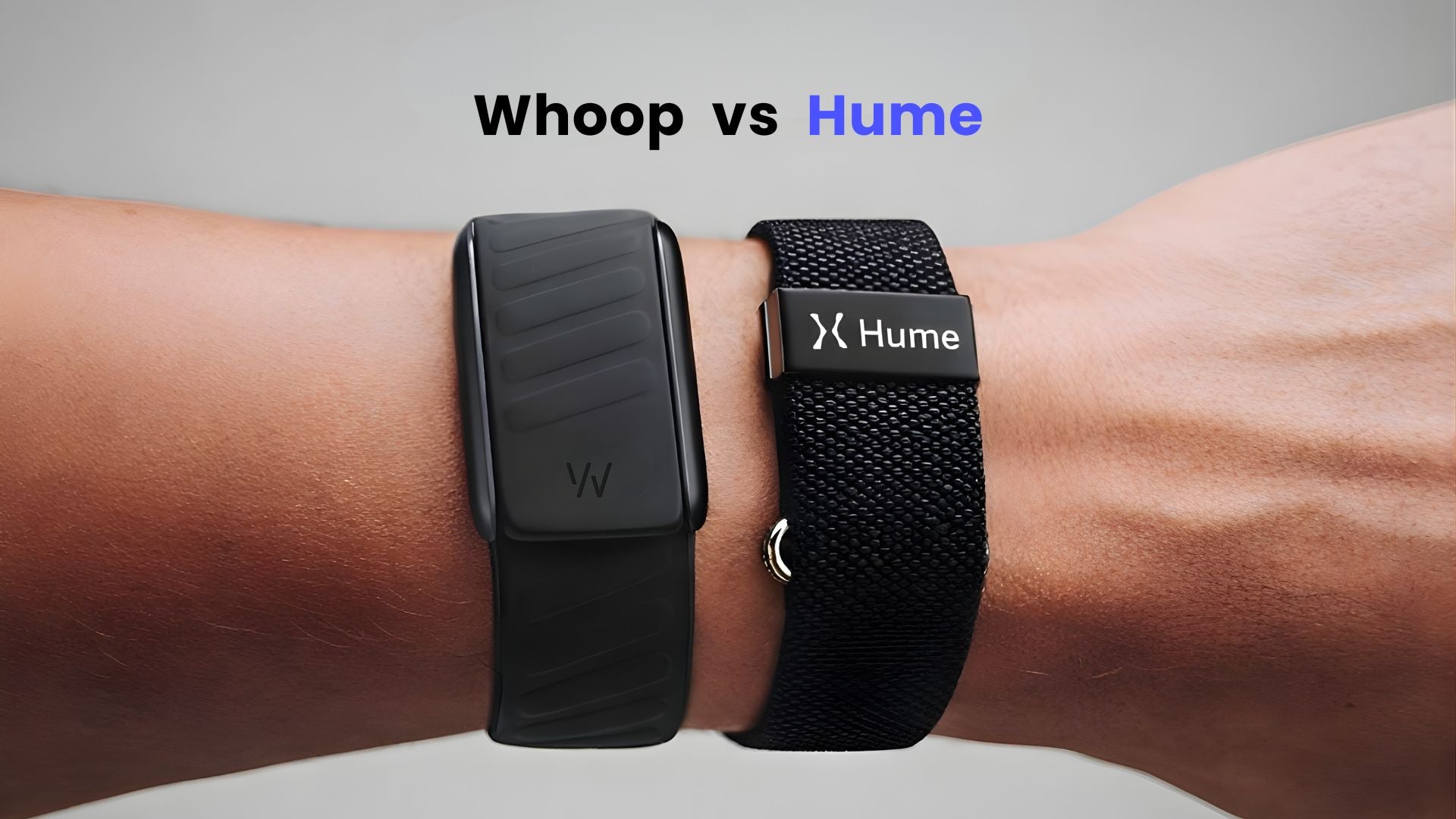
HUME BAND vs WHOOP 5.0: The Difference Between Tracking Your Workouts and Tracking Your Aging
WHOOP tracks how your body handles exertion. Hume tracks how your body is aging. These are not different versions of the same thing. Here's what that means for the device on your wrist.
By Ryan Cole | Performance Coach & Metabolic Health Specialist
Here's the Problem With Most Wearables (Including WHOOP)
For the past decade, the wearable industry has defined "health tracking" as:
✅ Step counts.
✅ Heart rate zones.
✅ Strain scores.
✅ Recovery percentages.
✅ Sleep duration.
Useful if you're an athlete managing training load.
It's almost useless if what you need to know is whether:
❗
Your metabolic health is declining?
❗
Your cardiovascular efficiency is trending in the wrong direction?
❗
Your circadian rhythm has been drifting for months?
Those aren't edge cases. Those are the health signals that predict what happens to your body over the next 5, 10, 20 years.
The category was built for Tier-1 athletes who needed data on training load, recovery, and readiness to perform. WHOOP came out of that world.
But If you're not a competitive athlete, which band is tracking the health metrics that matter for you?
The problem is that 95% of people wearing these bands aren't training for anything competitive.
They're trying to figure out: why their energy is inconsistent, why they wake up unrested, why their doctor keeps mentioning their fasting blood sugar, why they feel older than they should.
This is the gap Hume Band identified and built around.
A metabolic health system, one that reads the signals your body produces 24 hours a day and interprets them through the lens of longevity, inflammation risk, insulin efficiency, and biological aging.
It wears like a fitness band. It functions like a preventive health monitor.

What Each Wearable Was Built to Track
WHOOP 5.0
Performance Recovery
Built around the exertion-recovery loop. Every metric points back to one question: are you ready to train again?

Strain scoring (0–21 scale)
Recovery score (sleep-to-sleep)
Overnight HRV (deepest sleep)
Respiratory rate
Sleep stages + planner
Haptic alarms

SpO₂ not core on standard 5.0
No metabolic health scoring
No circadian HRV tracking
Healthspan locked to Peak tier
THE HUME BAND
Health Intelligence
Built around metabolic health, longevity, & long-term body awareness. Every metric points toward trajectory, not just daily readiness.

Metabolic Capacity + Momentum
Cardiovascular Health Score
Circadian HRV pattern tracking
Continuous SpO₂ + skin temp
Health Score (multi-biomarker)
Sleep architecture → recovery type
Longevity-oriented coaching
Free app. No subscription
You own + export your data
30-min full charge
WHOOP and Hume share some base sensors: heart rate, HRV, sleep staging. The difference isn't what they measure. It's what they do with it. WHOOP feeds it into a performance recovery loop. Hume feeds it into a metabolic health, cardiovascular, and longevity intelligence layer.
Here's a question most buyers never ask until it's too late: if you cancel your wearable subscription after two years of daily health tracking, what happens to the health picture you've been building?
5 Reasons HUME BAND Outperforms WHOOP for Real-World Health Tracking
1.
Hume Tracks Metabolic Health. WHOOP Doesn't.

Metabolic dysfunction is the single biggest upstream driver of chronic disease. It connects to cardiovascular disease, type 2 diabetes, cognitive decline, and accelerated biological aging.
Hume's app surfaces Metabolic Capacity: A longitudinal measure of how your metabolic system is functioning over weeks and months. Metabolic Momentum, a directional signal showing whether your trajectory is improving, stable, or declining.
WHOOP does not track metabolic health as a core function on standard 5.0. Its metrics revolve around strain, recovery, and sleep, all useful, but none of them designed to surface metabolic patterns
Why this matters: You could score green on WHOOP every morning for a year while your metabolic capacity quietly erodes. You'd never know, because WHOOP was never built to look for it.
2.
Hume Tracks Your Circadian Rhythm. WHOOP Gives You a Single Overnight Number.
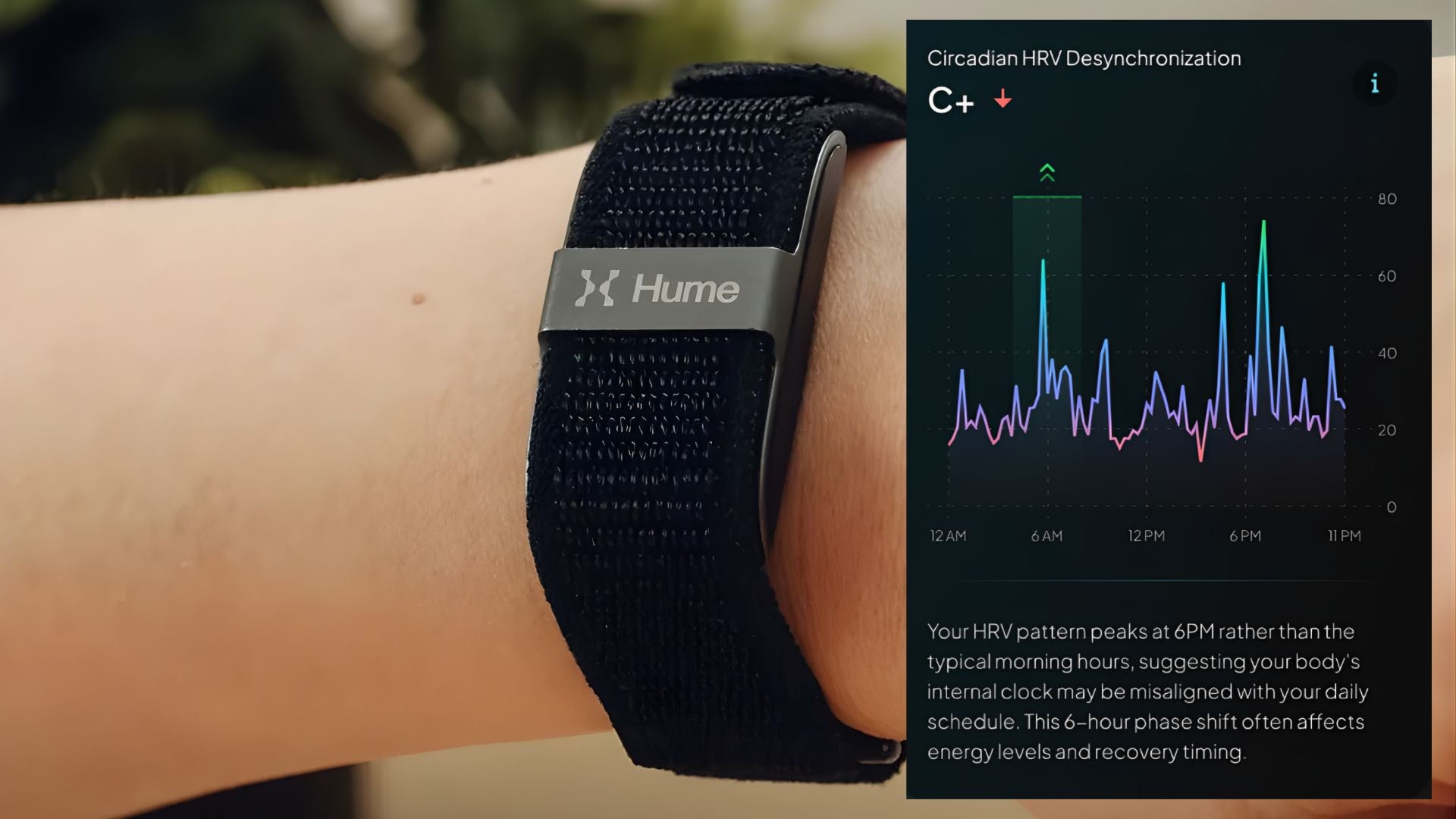
Your HRV isn't just a number. It has a rhythm, a pattern that should rise and fall in alignment with your circadian cycle throughout the day.
When that rhythm drifts or destabilizes, it can signal chronic stress accumulation, autonomic nervous system dysfunction, or circadian misalignment often weeks or months before you feel symptomatic.
Hume tracks circadian HRV patterns as a core metric. It shows whether your autonomic rhythm is aligned, shifting, or disrupted.
WHOOP measures HRV during the deepest period of overnight sleep. One reading. One number. No circadian context.
Why this matters: A single HRV number tells you how your nervous system performed at its lowest point last night. A circadian HRV pattern tells you whether your autonomic function is stable or falling apart. One is a data point. The other is a diagnostic lens.
3.
Hume Gives You a Cardiovascular Health Score. WHOOP Gives You Resting Heart Rate.

Both devices track heart rate and HRV. But what they do with that data is completely different.
Hume uses heart rate data, HRV, and recovery patterns to generate a dedicated Cardiovascular Health Score, tracking cardiovascular efficiency and autonomic recovery trends over time. That's a health metric.
WHOOP uses heart rate data to calculate strain and recovery: how hard you pushed and how well you bounced back. That's an athletic performance metric.
Why this matters: Cardiovascular disease is the leading cause of death globally. A device that tracks your heart rate for strain scoring and a device that tracks your cardiovascular efficiency trajectory are doing fundamentally different things with the same sensor data.
4.
Hume Tracks Continuous SpO₂ and Skin Temperature. WHOOP 5.0 Doesn't Prioritize Either.
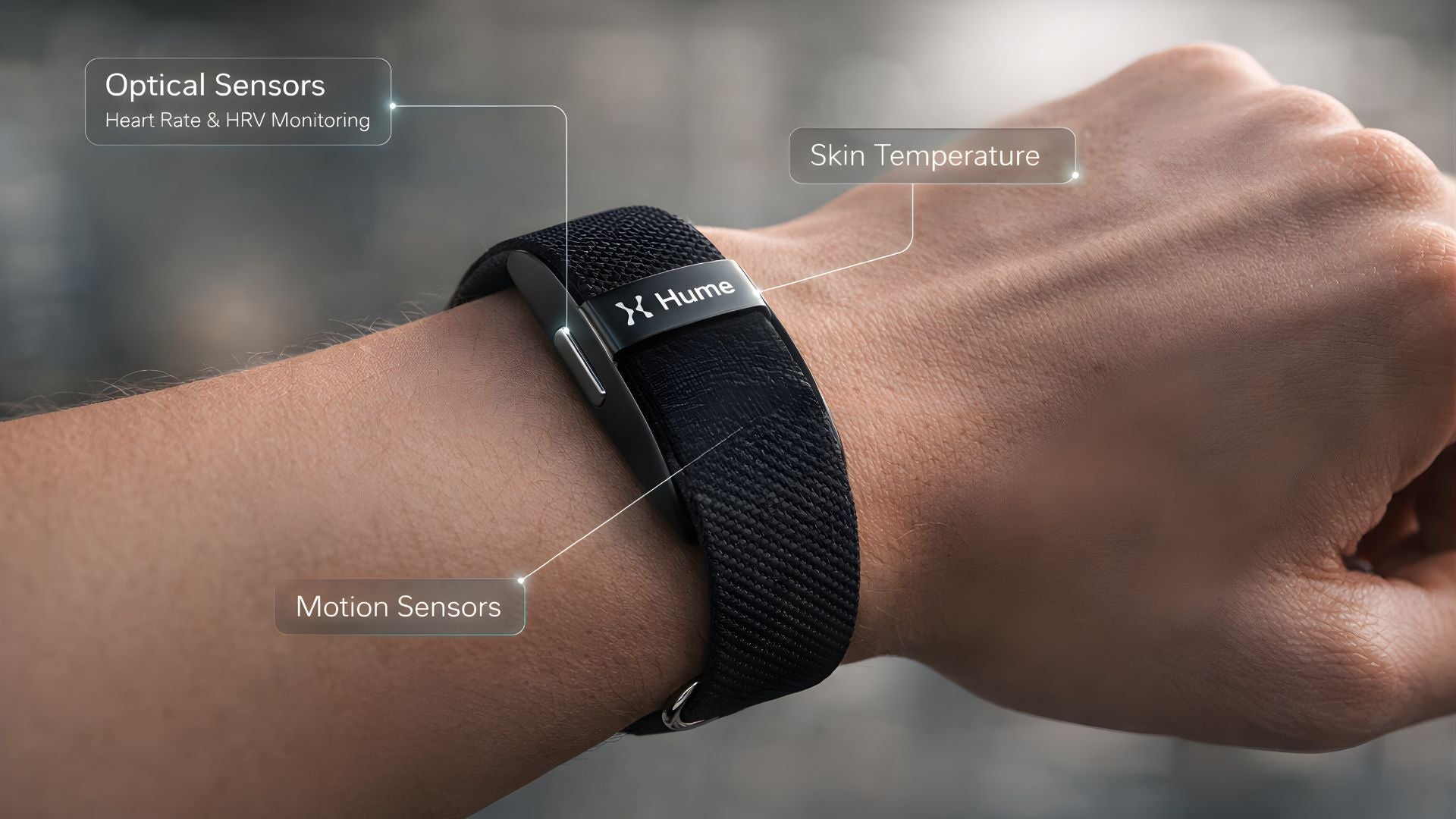
Overnight dips can signal sleep-disordered breathing, respiratory issues, or altitude adjustment problems.
Hume tracks SpO₂ continuously as a core metric, including overnight consistency patterns. Subtle shifts can indicate early illness onset, hormonal fluctuations, recovery status, or inflammatory responses.
On standard WHOOP 5.0, neither SpO₂ nor skin temperature are emphasized as core continuous tracking metrics in the way Hume positions them.
Why this matters: These are the kinds of signals that turn a wearable from a fitness gadget into an early warning system. They're not about training readiness. They're about catching changes in your body before they become problems.
5.
Hume's Core Health Metrics Are Free. WHOOP's Are Gated Behind Membership Tiers.
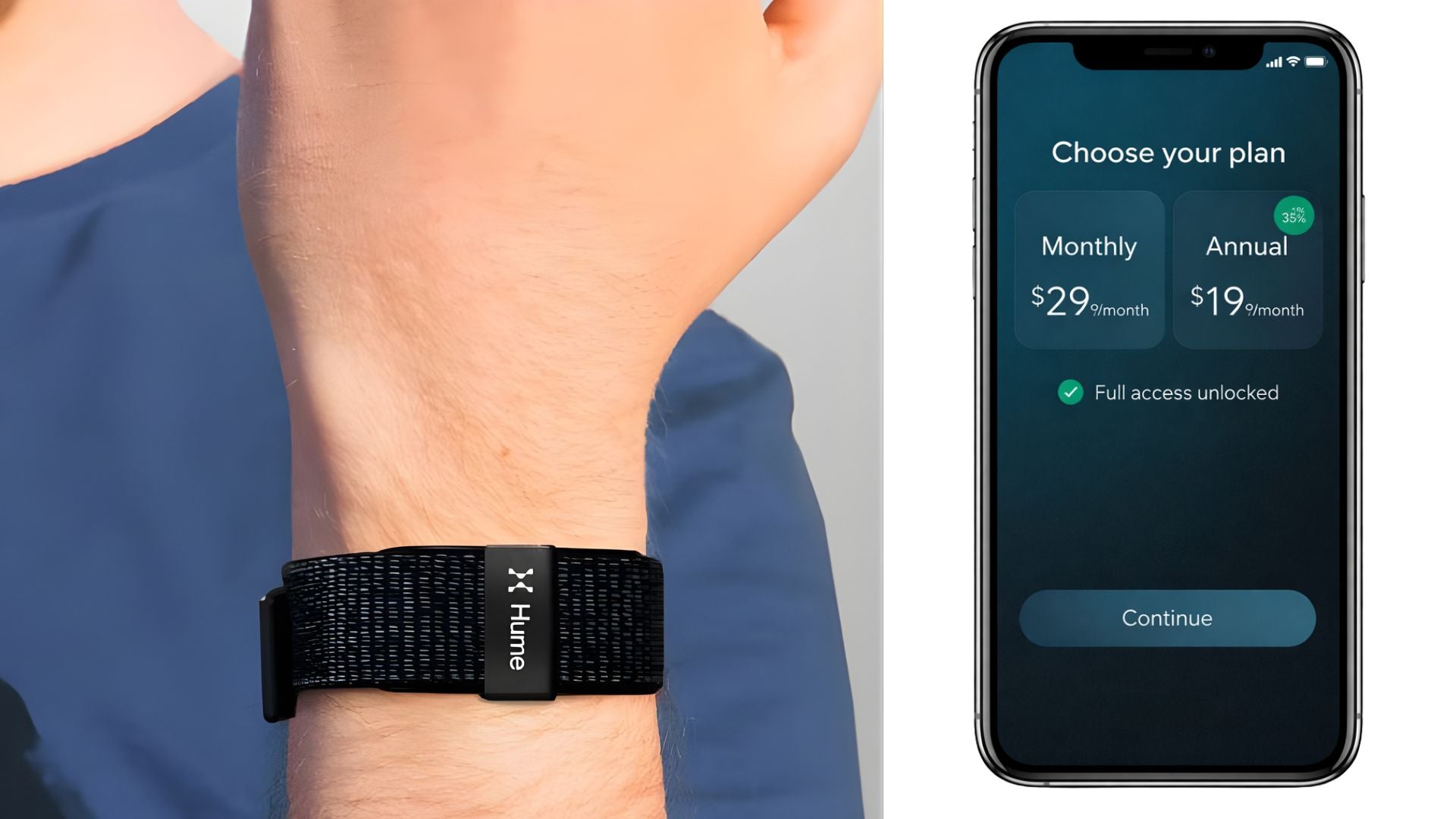
This is the structural difference most comparison pages bury at the bottom.
Hume is a purchase-and-own product. The band is a one-time purchase. With free Metabolic Capacity, Metabolic Momentum, Health Score, and Cardiovascular Health Score. No subscription required for core health metrics. Your data is exportable. You own it.
WHOOP is a membership product. The device and feature access depend on which plan you choose. Healthspan features (WHOOP Age, Pace of Aging) require the Peak tier. Stress Monitor requires Peak. Health Monitor requires Peak. ECG and Blood Pressure Insights require a completely different device (WHOOP MG) on the Life plan.
| Feature | WHOOP 5.0 | Hume Band |
|---|---|---|
| Health Intelligence | ||
| Metabolic Scoring | Not a focus | Metabolic Capacity + Momentum |
| CV Health Tracking | HRV + resting HR trends | Cardiovascular Health Score |
| Circadian Alignment | Not tracked | Circadian HRV patterns |
| Longevity Signals | Peak tier only | Free app — longevity coaching |
| Health Score | Daily recovery score | Multi-biomarker Health Score |
| Sensors | ||
| HRV | Overnight, deepest sleep | Continuous + circadian rhythm |
| SpO₂ | Not core on 5.0 | Continuous, overnight patterns |
| Skin Temperature | Not core | Continuous core metric |
| Heart Rate | Per-second continuous | Continuous |
| Access & Ownership | ||
| Core App | Membership required | Free — no subscription |
| Health Features | Gated by tier | All core metrics included |
| Data Ownership | Tied to membership | You own it. Exportable. |
| Hardware | ||
| Battery | 14+ days | 4–5 days |
| Charge Time | ~120 min | ~30 min full charge |
| Water Resistance | Pool-safe w/ swim bands | IP68 — 1m / 2hr |
| Haptic Alarms | Yes | — |
WHOOP leads on battery life and haptics. Hume leads on health depth, metabolic tracking, data ownership, and subscription-free access to the metrics that matter most for long-term health.
About That Battery Life Difference
WHOOP gets 14+ days. Hume gets 4–5 days.
But Hume charges to full in roughly 30 minutes. WHOOP takes about 120 minutes.
And the sensors driving Hume's battery draw: continuous SpO₂, skin temperature, circadian HRV tracking, are the same sensors that give it a broader health picture than WHOOP offers. The battery gap is a tradeoff: charging frequency vs. sensing depth.
Your Health Data Shouldn't Come With a Monthly Subscription
After two years of daily tracking, what happens to your health data if you cancel your subscription? With WHOOP's model, feature access is tied to plan status. With Hume, the answer is simple: your data is yours. Always.
(Optional Hume Premium adds AI-powered coaching and deeper analysis at $8.99/month. But the core health intelligence? That's yours from day one)
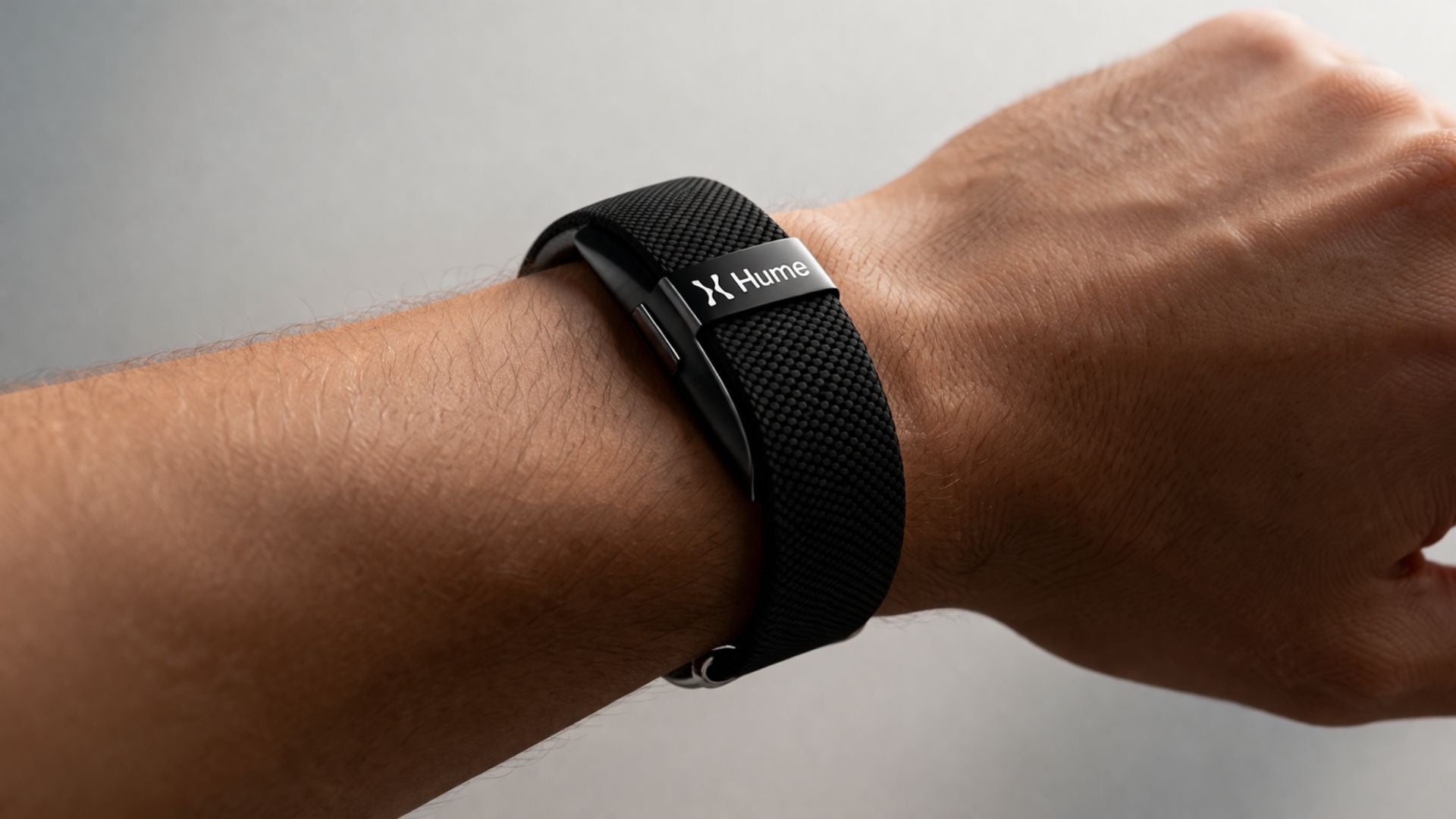
The Bottom Line
WHOOP Is a Training Tool.
Hume Is a Health Tool.
If you care about metabolic health, cardiovascular, circadian alignment, and understanding how your daily habits are affecting how you age: Hume was built for that question from day one. And it makes the answer accessible without a required subscription.
✅ Metabolic Capacity
✅ Metabolic Momentum
✅ Cardiovascular Health Score
✅ Health Score
✅ Circadian HRV
✅ Continuous SpO₂
✅ Skin temperature
✅ Longevity-oriented coaching.
All in the free app. All from day one.
Straight Answers to the Questions You're Probably Asking
"WHOOP has way better battery life."
It does. 14+ days vs. 4-5 days. But two things: Hume charges fully in about 30 minutes, so battery management is a non-event. And the sensors driving that battery use: continuous SpO₂, skin temperature monitoring, are part of why Hume captures a broader health picture.
"Doesn't WHOOP do Healthspan now?"
Yes, on the Peak membership tier. WHOOP added Healthspan features (WHOOP Age, Pace of Aging) as a premium expansion. Hume built its entire platform around longevity and metabolic health from day one, and makes those signals accessible in the free app. The distinction: is health intelligence foundational to the product, or is it a premium add-on?
"I'm an athlete. Wouldn't WHOOP be better?"
If your primary use case is training load management and strain-recovery optimization, WHOOP's system was built for exactly that. But if you're an athlete who also cares about what's happening metabolically, not just whether you recovered from yesterday, Hume adds a health intelligence layer that WHOOP's standard experience doesn't prioritize.
"Is Hume's app reliable?"
The sensor suite covers clinically relevant biomarkers: HRV, heart rate, SpO₂, skin temperature, sleep staging. The app's scoring system (Metabolic Capacity, Metabolic Momentum, Health Score, Cardiovascular Health Score) is a purpose-built health interpretation layer. Optional AI-powered Premium coaching adds deeper personalization for users who want it.
FREE APP INCLUDED
NO MONTHLY SUBSCRIPTION REQUIRED
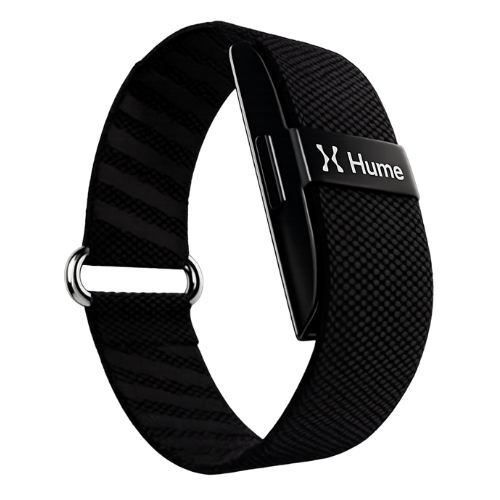
✔ One-time device purchase
✔ Free core app
✔ Optional premium at $8.99/mo
✔ 45-day satisfaction guarantee
🔒 Secure checkout
📦 Ships in 1 business day
✅ 45-day money back
This site is a free online resource that strives to offer helpful content and comparison features to its visitors. Please be advised that the operator of this site accepts advertising compensation from companies that appear on the site, and such compensation impacts the location and order in which the companies (and/or their products) are presented, and in some cases may also impact the rating that is assigned to them. To the extent that ratings appear on this site, such rating is determined by our subjective opinion and based on a methodology that aggregates our analysis of brand market share and reputation, each brand’s conversion rates, compensation paid to us and general consumer interest. Company listings on this page DO NOT imply endorsement. Except as expressly set forth in our Terms of Use, all representations and warranties regarding the information presented on this page are disclaimed. The information, including pricing, which appears on this site is subject to change at any time.
Copyright © 2026 - Hume Band Review
All Rights Reserved